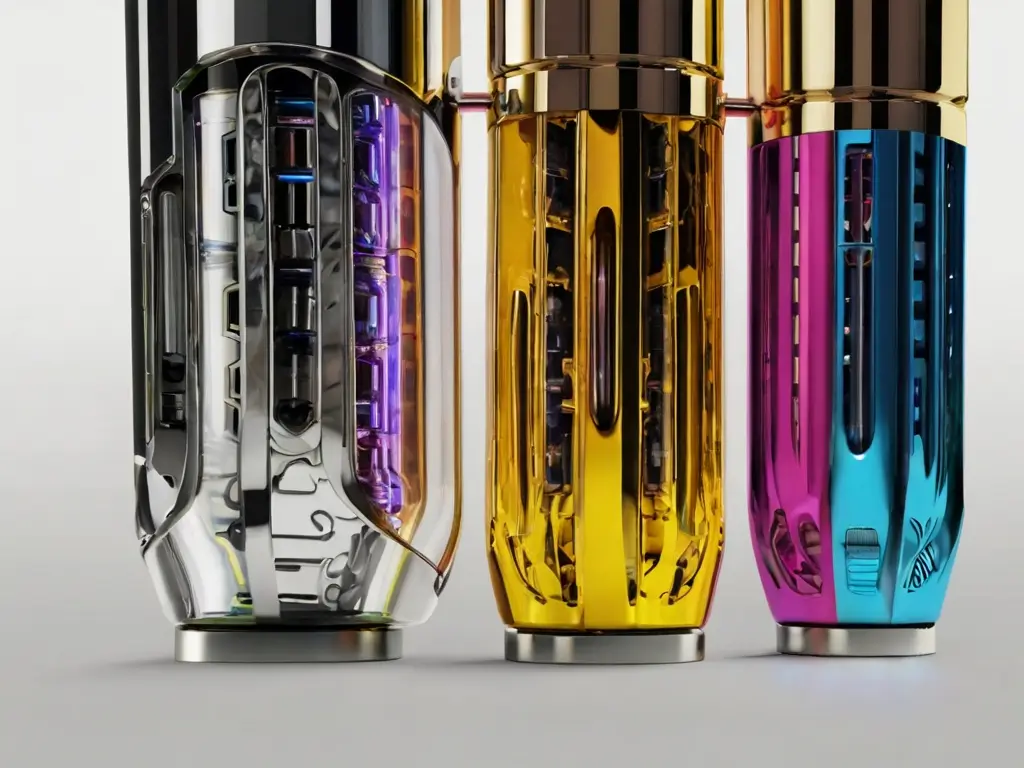
Electroplating has many applications across various industries. It is commonly used to change the surface properties of an object while maintaining its substrate strength and integrity. The electroplated layer can enhance aesthetics, improve corrosion or wear resistance, increase hardness, modify conductivity, reduce friction, or improve paint adhesion.
While electroplating offers many benefits, it also has some drawbacks to consider. Here is an in-depth look at the key advantages and disadvantages of electroplating.
Advantages of Electroplating
Electroplating provides many favorable properties that make it a popular choice across various applications. Here are some of the key benefits of using this metal finishing technique:
Enhanced Aesthetics
One of the primary reasons for electroplating is aesthetic appeal. Electroplating allows depositing a thin layer of a metal with an attractive finish, like chrome, gold, or silver, onto a cheaper metal substrate. This enhances the appearance of the object while minimizing material costs.
For example, electroplating nickel and chromium onto plastic or metal parts can give them a shiny, mirrored finish. Jewelry makers also utilize electroplating to coat cheaper metals with gold or silver to enhance aesthetics. The electroplated layer replicates even the finest details of the substrate, providing an attractive finish.
Corrosion Protection
Electroplating provides excellent corrosion protection by coating the substrate metal with a layer of a nobler metal. The nobler metal acts as a barrier between the environment and the substrate, preventing oxidation or rust.
Nickel and chromium are commonly electroplated onto steel parts to prevent corrosion. Copper electroplating also protects iron and steel from corrosion. The thickness of the electroplated layer can be controlled to suit the corrosion protection needs of different applications.
Wear and Abrasion Resistance
Electroplating creates a surface layer that is harder than the underlying substrate, improving the wear and abrasion resistance of the object. This makes the object more durable and suitable for applications where sliding contact is involved.
Hard chromium plating is commonly applied to hydraulic piston rods, pump shafts, bearing surfaces, and molds to improve wear resistance. Nickel-cobalt alloy plating is also used to enhance wear properties. The electroplated layer retains lubricants better as well.
Heat Resistance
Electroplated coatings can enhance heat resistance in various applications where high temperatures are involved. Chromium, nickel, and cobalt plating can allow components to withstand high temperatures without damage.
Turbine blades, furnace parts, engine components are often electroplated with heat-resistant metals to improve temperature tolerance. The refractory metal layer reflects heat and insulates the substrate from extreme temperatures.
Electrical Conductivity
Electroplating with highly conductive metals like copper, silver, gold, and aluminum enhances the electrical conductivity of plastic parts and components. This allows using plastics in electronics and electrical systems that require conductivity.
Printed circuit boards, switchgear components, and connectors are commonly electroplated to create conductive surfaces. The thickness of the electroplated layer can be controlled to achieve the desired level of conductivity.
Friction and Wear Reduction
Electroplated coatings of soft metals like gold, silver, tin, zinc, and cadmium provide lubricity and reduce friction between moving mechanical parts. This minimizes wear and friction between the moving surfaces.
Electroplated soft metal coatings prevent seizing up of parts and enable smooth movement. They are easy to apply compared to grease lubrication and do not attract dust. Friction reduction improves performance and extends service life.
Improved Solderability
Applying metal coatings by electroplating enhances the solderability of materials like steel, cast iron, and copper alloys. The change in surface properties enables excellent wetting when soldering.
Gold and tin coatings allow solder to adhere firmly to the base metal. This provides strong, reliable solder joints in electronic assemblies and components. The electroplated layer also prevents oxidation of the soldering surfaces.
Restoration and Repair
Electroplating makes it possible to repair worn or damaged metal components by building up the surface metal thickness. It is commonly used to restore worn parts to original specifications, avoiding expensive replacements.
Machined surfaces that suffer damage from wear or corrosion can be restored by electroplating. The process coats the defects and brings the dimensions back to tolerance. This restoration is cheaper than completely re-manufacturing the parts.
Improved Paint Adhesion
Electroplated coatings of metals like zinc, nickel, and copper act as excellent bonding surfaces for paints and other organic coatings. This allows paints to adhere evenly and tightly to the substrate.
The change in surface properties enables paints to properly wet the surface and bind strongly. Electroplating is commonly done before painting metal objects to improve coating adhesion and prevent chipping or flaking.
Low Processing Temperature
Unlike other metal coating processes, electroplating can be done close to room temperatures. This prevents any damage to the substrate material due to thermal stresses.
The low-temperature electroplating process is suitable for coating plastics and heat-sensitive materials. There is no risk of warping or melting the substrates. It also minimizes energy consumption.
Thickness Control
By manipulating the electroplating parameters, the thickness of the deposited layer can be controlled precisely to within a few microns. Any desired thickness can be achieved by adjusting the plating time.
This allows customizing the plating thickness to suit the application needs in terms of corrosion protection, wear resistance, friction properties, heat resistance, etc. Thin layers help minimize cost.
Uniform Coatings
The electroplating process results in uniform coatings that evenly deposit over the entire surface of the object. The electric current distribution results in uniform thickness and properties.
Electroplating can coat complex geometries with excellent coverage due to the uniform deposition. Internal surfaces of tubes, deep recesses, and intricate shapes can be plated.
Automated Process
Modern electroplating systems are highly automated, allowing fast processing with minimal manual intervention. Large volumes of parts can be processed efficiently.
Automated electroplating lines involve part loading, pre-treatment, plating, rinsing, and unloading stages for complete hands-off processing. The automated process ensures consistency in quality.
Low Skill Requirements
The electroplating process itself does not require highly skilled labor and extensive training. Semi-skilled operators can be easily trained to monitor and control the automated systems.
Basic training in safety procedures, solution preparation, part loading/unloading, and equipment control enables workers to perform the process. This reduces labor overhead costs.
Cost Effectiveness
Electroplating is an economically viable surface finishing process compared to other coating techniques. It allows significant cost savings, especially from reduced corrosion damage and wear.
The electroplating setup and running costs are reasonable for most commercial and industrial applications. The process is cost-effective for both small and large-scale production runs.
Disadvantages of Electroplating
While electroplating has several advantages, the process also comes with some drawbacks:
Hazardous Byproducts
The electroplating process generates toxic sludge and rinse water containing heavy metals, acids, alkalis, and cyanides. Safely treating and disposing of these hazardous byproducts is expensive.
Stringent procedures are required to treat and dispose of the plating effluents to meet environmental regulations. This increases the overall costs associated with electroplating.
High Initial Investment
Setting up electroplating equipment and facilities requires significant upfront capital investment. This includes costs for plating tanks, rectifiers, ventilation, wastewater treatment, etc.
For small businesses and job shops, the high initial investment may not be feasible. Larger production volumes are required to justify the costs of setting up an electroplating system.
Complex Process Control
Achieving high-quality, uniform, and consistent electroplated coatings requires careful control of various process parameters. This includes bath chemistry, temperature, current density, agitation, etc.
Maintaining the optimal conditions requires continuous monitoring and adjustments. Complex control systems are needed for large-scale electroplating, making the process challenging.
Specific Safety Concerns
Working with electroplating baths containing acids/alkalis and toxic metals like cadmium, chromium, nickel, and cyanides poses health hazards if proper precautions are not taken.
Proper training, protective gear, and ventilation systems are essential to minimize exposure risks. This adds overhead costs and management responsibilities.
Surface Preparation
The substrate surface needs thorough cleaning and preparation before electroplating to ensure proper adhesion and coating quality [20].
Degreasing, pickling, stripping, masking, polishing, and activation steps may be required. This adds additional processing steps and cost.
Plating Adhesion Failures
Inadequate surface preparation or process control can lead to poor adhesion of the electroplated layer, resulting in flaking or peeling.
This can cause appearance problems and expose the substrate to damage. Re-doing failed coatings adds time and cost.
Hydrogen Embrittlement
Depositing high-strength electroplated coatings on high-strength steels can cause hydrogen embrittlement, resulting in cracking or fracture of the components.
This risk must be minimized by controlling plating parameters and baking after electroplating to drive out absorbed hydrogen.
Dimensional Changes
Adding the electroplated layer increases the overall dimensions of the object. This must be accounted for in the product design.
The deposition process can also smooth out fine details and fill in surface imperfections. Critical dimensions and tolerances may be affected.
Key Considerations for Electroplating
Electroplating provides many benefits but also comes with some downsides. Here are some key factors to consider when determining if electroplating is the right surface finishing process:
- Evaluate part size and geometry to ensure uniform coatings
- Assess production volume and throughput requirements
- Determine substrate material and its compatibility with plating process
- Test plating adhesion on sample parts before full production
- Calculate total process operating costs, including waste treatment
- Review environmental regulations regarding chemical use and disposal
- Analyze in-house expertise for maintaining plating baths and quality control
- Consider alternate coating processes like anodizing, vapor deposition, etc.
- Weigh tradeoffs between performance enhancement versus increased costs
- Research optimal electroplating processes and parameters for intended application
Conclusion
Electroplating is a versatile metal finishing process with many advantages for enhancing aesthetics, wear resistance, corrosion protection, electrical conductivity, and other properties. However, the process does have some drawbacks regarding environmental impact, costs, and process control needs.
Carefully weighing the pros and cons against application requirements and production capabilities allows determining if electroplating is the right choice. For many applications, the benefits outweigh the downsides, making electroplating a practical and cost-effective coating process.
Proper facility design, equipment selection, process control, waste management, and worker safety procedures enable realizing the maximum benefits of electroplating while minimizing the potential disadvantages. Overall, electroplating is a useful technology for surface property enhancement across diverse industries when implemented with diligence.