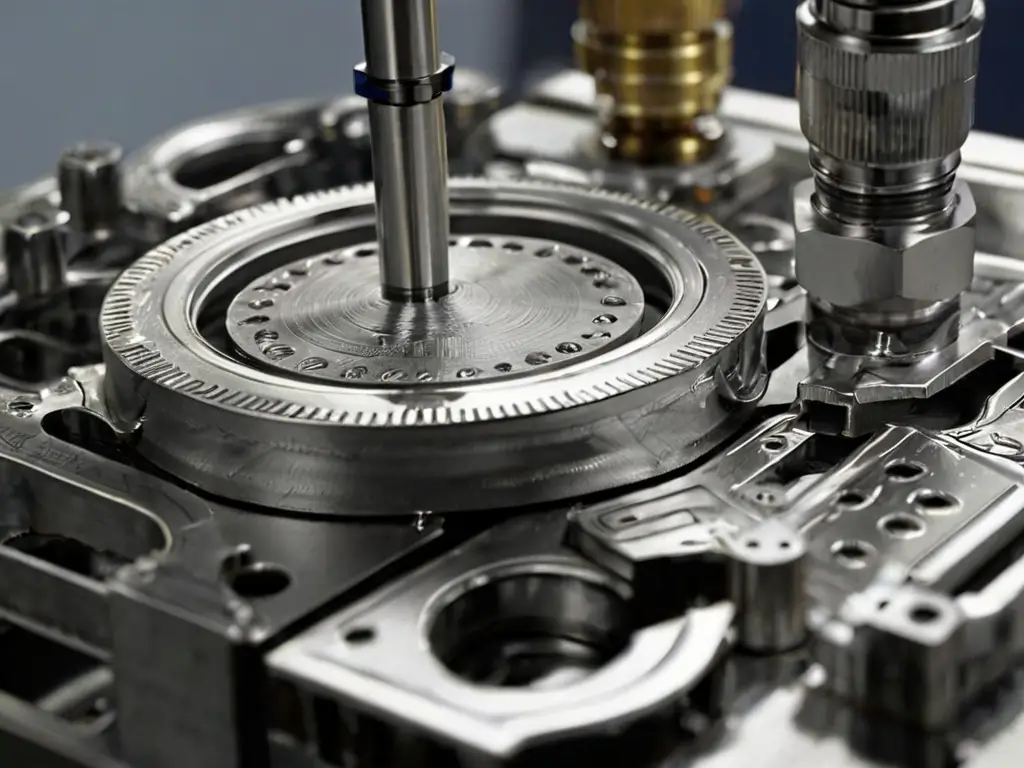
Electroforming and electroplating are two metal finishing processes that utilize electricity to coat a surface with metal. While they share some similarities, there are important distinctions between these two techniques.
Electroplating
Electroplating is a common industrial process used to apply a thin layer of metal coating onto another metal surface using an electric current. It involves passing an electric current through a solution called an electrolyte that contains dissolved metal ions, causing the metal ions to adhere to the surface being plated [1].
Some key points about electroplating:
- The purpose is to form a thin and even coating of metal over the substrate for decorative, protective, or functional purposes [2].
- Electroplating allows coating of metals that cannot be deposited by other chemical or electrochemical means. Common metals used in electroplating include cadmium, chromium, copper, gold, nickel, silver, tin, and zinc [3].
- The substrate metal acts as the cathode (negative electrode) which is immersed into the electrolyte along with the anode (positive electrode) [2].
- When an electric current is applied, metal ions in the solution get deposited onto the cathode giving it a thin coating of the anode metal.
- Electroplating setups use either soluble or insoluble anodes depending on the type of metal being deposited [3].
- The thickness of the electroplated layer can range from less than 1 micron to over 25 microns. Multiple plating layers are applied to get thicker coatings [4].
- Electroplating is commonly used in automotive, aerospace, electronics, jewelry and several other industries.
Some major applications of electroplating include [2]:
- Decorative plating – For aesthetic purposes and added appeal. Common examples are gold plating jewelry.
- Corrosion protection – Coating base metals with more corrosion-resistant metals to prevent rusting and other chemical damage.
- Wear/Abrasion resistance – Harder metals like chromium are plated to improve wear life.
- Electrical conductivity – Copper coating over plastic parts improves conductivity.
- Lubricity – Coating bearing surfaces with soft metals like silver reduces friction.
So in summary, electroplating is a versatile metal finishing technique to coat objects with thin, uniform and adherent metal layers for enhanced functional, decorative and protective properties.
What is Electroforming?
Electroforming is a specialized electroplating process used to create metallic parts with custom shapes, intricate details and various thickness profiles. It involves the electrodeposition of metal ions onto a substrate to build up a fully formed, free-standing metal piece [5].
The key characteristics of the electroforming process are:
- It can be used to fabricate metal parts with complex geometries that are difficult or impossible to produce by other methods [6].
- The desired shape is formed through the gradual buildup of electrodeposited metal over successive cycles, allowing precise control over thickness and form.
- The process utilizes a reusable mandrel or mold that acts as the cathode to give shape to the deposited metal [7].
- A wide range of metals like nickel, copper, silver, gold etc. can be electroformed. Nickel is most commonly used due to its hardness and ability to replicate fine details [7].
- Electroforming enables fabrication of items with thin walls, hollow cores and undercuts which cannot be easily molded or machined [6].
- It can be used to create various metal products like electroforms, stamping and embossing dies, molds, prototypes, reflectors and metallic arts [5].
- Industries using electroforming include aerospace, automotive, electronics, manufacturing, medical, and defense.
The key steps in the electroforming process are [5]:
- Creating a mandrel with the desired shape.
- Cleaning and activating the mandrel surface.
- Submerging the mandrel in an electrolyte bath along with an anode.
- Passing electric current to deposit metal onto the mandrel.
- Allowing the coating to build up to required thickness.
- Removing the electroformed part from the mandrel.
- Finishing processes like polishing or adding surface coatings.
So in summary, electroforming enables creating detailed and complex shaped metal parts by electrodeposition onto a template, which are then removed and finished.
Key Differences Between Electroplating and Electroforming
Now that we have understood the basics of electroplating and electroforming, let’s examine some of the major factors that set these two techniques apart:
1. Objective
The core objective differs between both processes:
- Electroplating aims to form a thin, protective or decorative coating on a surface.
- Electroforming seeks to create a fully formed, free-standing metal part.
2. Thickness of Metal Deposit
- Electroplating deposits a thin layer of metal in the range of 0.1 to 25 microns.
- Electroforming leads to much thicker coatings from 25 microns up to several millimeters as it builds up the desired shape.
3. Coating Uniformity
- Electroplating aims for uniform thickness and coverage across the entire surface.
- Electroforming involves uneven deposits, with thickness variations as per the desired shape.
4. Base Material
- Electroplating can be done on all conductive surfaces including metals, alloys and semiconductors.
- Electroforming requires a reusable mandrel which acts as the cathode during deposition.
5. Final Products
- Electroplating results in a thin coating bonded to the base object.
- Electroforming creates a freestanding metal part that is removed from the mandrel.
6. Process Control
- Electroplating requires monitoring bath chemistry and operating parameters to optimize coating properties.
- Electroforming involves stringent process control to build shapes accurately as per the mandrel.
7. Applications
- Electroplating has a wide range of applications from decorative to functional coatings.
- Electroforming enables fabrication of complex metal parts mainly for manufacturing industries.
8. Technical Considerations
- Electroplating requires optimal anode-cathode spacing, solution agitation, temperature control and additive replenishment.
- Electroforming needs accurate mandrel design, precise current regulation, part removal techniques and secondary finishing.
9. Cost Aspects
- Electroplating can be done at lower costs due to simpler infrastructure requirements.
- Electroforming entails higher setup costs for mandrel fabrication, close process monitoring, skilled labor and secondary operations.
So in summary, while both electroplating and electroforming rely on electrodeposition, electroplating aims for uniform surface coatings while electroforming creates intricate metal shapes by building up desired forms.
Electroforming vs Electroplating – Which is Better?
Whether electroforming or electroplating is the better choice depends on the specific requirements of the application such as:
- Electroplating is preferred for corrosion protection, wear resistance, aesthetics, and other surface coating needs.
- Electroforming enables fabrication of complex, high-precision metal components not feasible by other methods.
- Electroplating can be done on all conductive substrates but has limitations on coating thickness and uniformity.
- Electroforming works only with specially prepared conductive mandrels but allows greater control over form and thickness.
- Electroplating requires a simpler setup and lower investment compared to electroforming.
- Electroforming can produce metal parts unattainable by machining or molding but requires greater process expertise.
- For thin decorative coatings on finished products, electroplating is the better option.
- When the objective is manufacturing intricate metal components, electroforming is the preferred process.
So the suitability depends on whether the goal is surface modification through coatings or creating freestanding metal parts. The part size, shape, tolerances, and production quantities also play a role in selecting between the two techniques.
Conclusion
Electroplating and electroforming provide electrically-deposited metal coatings onto surfaces through the action of electric current on dissolved metal ions. While both techniques seem similar at first glance, electroplating aims for thin uniform coatings to modify surface properties while electroforming builds up metal deposits to create standalone objects.
Factors like deposit thickness, coating consistency, base materials, process control and cost considerations differentiate these two processes and make them suitable for distinct applications. Electroplating is the method of choice for decorative, protective and functional coatings at lower production costs. Electroforming enables fabrication of intricate and high-precision metal components that cannot be easily manufactured by other techniques.
References:
[1] Schlesinger, M. and M. Paunovic. Modern Electroplating. 5th ed., John Wiley & Sons, 2010.
[2] Lowenheim, Frederick A. Modern Electroplating. 3rd ed., John Wiley & Sons, 1974.
[3] Nasibi, M., et al. “Electroplating – Fundamentals of Surface Finishing.” Kenan Çebi, IntechOpen, 14 Mar. 2017, https://www.intechopen.com/chapters/53946.
[4] “Electroplating.” Wikipedia, https://en.wikipedia.org/wiki/Electroplating. Accessed 27 Feb. 2023.
[5] Panda, R.K., et al. “Electroforming: An Overview.” International Journal of Engineering Research and Technology, vol. 10, no. 1, 2017, pp. 1-4.
[6] “Electroforming Process.” Thomasnet, https://www.thomasnet.com/articles/custom-manufacturing-fabricating/electroforming-process/. Accessed 27 Feb. 2023.
[7] “Electroforming.” Wikipedia, https://en.wikipedia.org/wiki/Electroforming. Accessed 27 Feb. 2023.