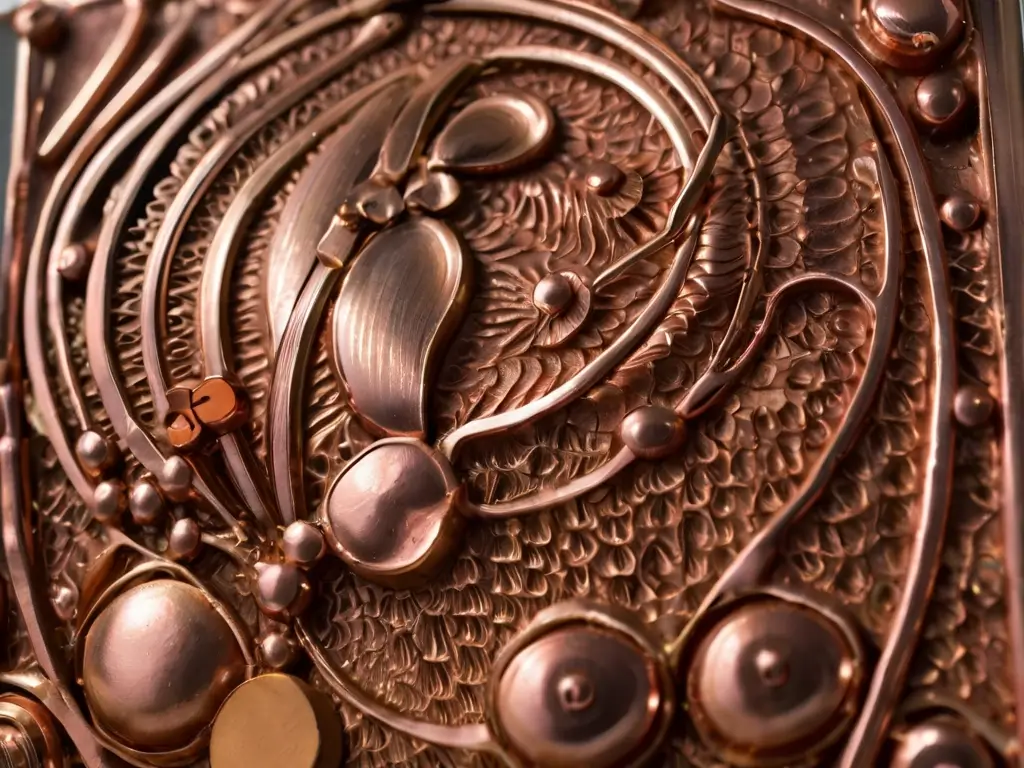
What is the coating of copper called? The coating of copper is called “kalai” or “qalai”. It is a process of depositing a layer of metal tin onto the surface of copper or brass alloys. The word “kalai” is derived from the Sanskrit word “kalya lepa,” which means “white wash or tin”. Kalai, also known as qalai, is the traditional practice of coating copper and brass vessels with a thin layer of tin to protect and preserve them. This ancient art form originated in India and has been practiced for centuries across South and Southeast Asia.
A Brief History of Kalai
The origins of kalai can be traced back over 2000 years to ancient India. Archaeological evidence shows that tin-coated copper vessels were in use during the Indus Valley Civilization around 2000 BCE.
References to kalai first appeared in Sanskrit texts such as the Parsibhashanushasana and Ain-I-Akbari, indicating it was an established practice by the 1st millennium CE. The term “kalai” or “qalai” comes from the Sanskrit words “kalya lepa” meaning “white wash or tin.”
Over the centuries, kalai became an integral part of Hindu rituals and Ayurvedic medicine. Copper vessels called “kalam” were used for storing water and cooking due to copper’s antimicrobial properties. Coating them with tin prevented the copper from reacting with food and liquids.
Kalai spread from India to Southeast Asia along with the expansion of Hinduism and Buddhism. Tin-coated copper vessels have been found at archaeological sites in Thailand, Cambodia, Malaysia and Indonesia dating back to the 9th century CE. The technique is still practiced across the region today.
The Spiritual Significance of Kalai
In addition to its practical usage, kalai also holds spiritual importance in Hinduism. According to ancient beliefs, copper has the ability to attract and transmit “Chaitanya” – the divine consciousness. Coating copper vessels with tin was thought to enhance these spiritual properties.
Water stored in a kalai-coated copper vessel is believed to absorb the Chaitanya, making it “amrit pani” or “water that has life.” This water is considered blessed and cleansing. Hindu rituals often involve drinking water from a kalai kalam to purify oneself spiritually.
Ayurvedic medicine also recommends storing and drinking water from tin-coated copper vessels. Water stored this way is believed to balance the three doshas – vata, pitta and kapha. The antimicrobial properties prevent bacterial growth, allowing the water to be stored longer.
Kalai-coated utensils are prized items in Hindu kitchens even today. Using them is thought to impart a divine essence to food. The spiritual and medicinal beliefs associated with kalai have sustained this art over millennia.
The Science Behind Using Tin-Coated Copper Vessels
While the spiritual reasons behind kalai are rooted in ancient Hindu philosophy, modern science also explains the benefits of this technique:
Preserving Copper and Brass
Copper readily reacts with oxygen, carbon dioxide and sulfur to produce verdigris – a greenish coating of copper carbonate. Foods like lemons can cause copper vessels to blacken and corrode. Coating with tin serves as a protective barrier.
Tin is stable and does not readily react with oxygen or acids. The inert tin layer prevents the copper underneath from coming in contact with air, moisture or food. This preserves the vessel for longer periods.
Safety from Copper Toxicity
Copper toxicity can result when acidic foods are cooked, stored or served in uncoated copper vessels. Excess copper intake through food and water can cause gastrointestinal issues.
Tin coating prevents this leaching of copper into food. The tin layer provides a food-safe, non-reactive surface for cooking and storage.
Maintaining Thermal Conductivity
Copper is an excellent conductor of heat. This allows copper-bottomed pans to cook food evenly. Tin is also a good thermal conductor. The thin tin coating does not significantly affect the thermal conductivity of the vessel.
Kalai provides the benefits of non-reactive tin without compromising on the heat transmission of the underlying copper layer. This results in energy-efficient cooking.
Antimicrobial Properties
Copper and tin both exhibit antimicrobial properties. Copper ions are effective against several disease-causing bacteria and viruses. The combination of copper and tin enhances these antimicrobial effects.
Studies show that storing water in copper vessels coated with tin can destroy disease-causing pathogens. The antimicrobial effects also prevent biofilm formation.
The Kalai Plating Process
The traditional kalai plating process involves meticulous cleaning, polishing, tinning and buffing:
Cleaning the Vessel
The copper or brass vessel is scrubbed with a paste of tamarind, ash, lime and salt. This removes oxidation and grease from the surface. It is then washed with hot water and dried thoroughly.
Heating and Polishing
The vessel is heated over a wood fire to make the surface smoother. It is then polished using a stone or sand to create a bright, smooth finish for the tin to adhere to.
Applying the Tin Layer
The vessel is heated again and virgin grade tin is rubbed evenly over the surface using a cloth soaked in tin solution. This deposits a thin coating of tin.
Buffing and Cold Water Dip
Finally, the plated vessel is rubbed with a smooth stone to buff out unevenness. It is then dipped in cold water to shock and settle the tin layer. This completes the age-old kalai plating process.
Modern Methods of Tin Plating Copper
While artisanal kalai methods are still practiced, large-scale commercial production of tin-coated copper vessels today relies on electroplating. This involves depositing tin using electric current rather than manual rubbing.
Electroplating allows uniform coatings to be applied over a shorter time with minimal waste. The steps involve alkaline cleaning, acid dipping, electroplating, rinsing and drying. Mechanical buffing and polishing follow to create a brilliant shine.
Compared to traditional kalai, electroplating is cheaper, quicker and can accommodate large volumes. However, many traditional kalai artisans insist that the spiritual essence and antimicrobial effects are stronger in manually plated wares.
Kalai Tradition Across South and Southeast Asia
The kalai tradition of tin-coating copperware spread across Asia over two millennia through trade, conquest and cultural assimilation. Here is a brief overview of kalai in different regions:
India
Kalai originated in India where it is an integral part of rituals and Ayurveda. The dwindling numbers of hereditary kalai artisan families still ply their trade across the country. Kalai copperware is widely used, especially in South India.
Sri Lanka
Sri Lankan kalai has its roots in Southern India. Tin-plated copper vessels known locally as “kalayannakendi” are used for religious ceremonies and to store water. Kalai artisans can be found in Kandy, Galle and Jaffna.
Myanmar
Kalay (Burmese name for kalai) has been practiced in Myanmar since the Bagan Era (9th-13th centuries CE). The bronze Buddhas of Myanmar are also coated with stannic oxide for preservation. Kalay artisans are concentrated in Mandalay.
Thailand
Thailand has a long kalai tradition adapted from Indian and Cambodian influences. “Klang kalai” vessels are commonly found in Thai temples and households. Kalai tinsmiths are mainly based in Bangkok and northern provinces like Chiang Mai and Lampang.
Cambodia
In Cambodia, kalai is known as “kaalaa.” Cambodian craftsmen produce ornate kalai silver and copper wares using techniques adapted from India and Thailand. Kampong Chhnang is the main kalai production center in Cambodia.
Indonesia
Indonesian kalai has roots in Hindu-Buddhist influences from India. In Bali, kalai is known as “pelat timah” and retains ceremonial and ritual significance for religious ceremonies. Kalai work can be found across Indonesia including Java, Sumatra and Sulawesi.
The Decline of Traditional Kalai
Despite its ancient roots, traditional handmade kalai is struggling to survive today due to modernization and changing lifestyles. Young generations are abandoning the hereditary craft, preferring more lucrative careers.
Cheap imported vessels and kitchenware have also reduced demand for labor-intensive kalai wares. Attempts are being made to revive kalai by promoting it as heritage craftsmanship. But the future of this ancient art remains uncertain.
Conclusion
The technique of coating copper with tin to produce kalai ware developed in ancient India in response to practical needs – to make copper and brass vessels safer and longer-lasting for storing, cooking and serving food and water.
But over centuries, the mundane craft transformed into a sacred ritual practice endowed with philosophical and spiritual meaning. For practitioners and users, kalai represents the amalgamation of art, science and faith.
While under threat from modernization, hopefully this living cultural heritage will continue to be practiced and preserved as both ancient wisdom and culinary craft. The layered mysteries of kalai deserve to be protected for future generations.
References
- Mudgal, V.P. (1992). Tin, its mining, production, properties, and applications. Jamshedpur: National Metallurgical Laboratory. A technical book that covers the history and metallurgy of tin plating including details on the kalai process.
- Gupta, C.M. (1996). Brassware traditional & modern. New Delhi: Lustre Press. Provides information on the origins, evolution and processes of brass and copper ware crafts including kalai.
- Ranganathan, S. (2017). Divine Coppervessels. Mumbai: Parimal Publications. An overview of kalai traditions focused on the spiritual and ayurvedic significance of tin-plated copper vessels.
- Lefferts, L.Jr. (2014). Stannic oxide technology of early Southeast Asia. Journal of Southeast Asian Studies, 15(2), 251-262. Academic paper analyzing archaeological evidence of ancient kalai ware found across Southeast Asia.
- Rajesh, S. (2011). Kalai Karkhana: Tinning copperware in India. Thrissur: Kerala Folklore Academy. Documents the processes, tools and lives of traditional kalai artisans across different parts of India.
- Somjee, A.H. (2021). Living Traditions of Kalai. Ahmedabad: Mapin Publishing. Features photographs and interviews showcasing kalai craftsmanship in India as part of intangible cultural heritage.
- Rudofsky, B. (1964). The Metal Shapers of Moradabad. Bombay: Asia Publishing House. Early seminal work on the moradabadi crafts including detailed documentation of the kalai tinning process.